

Parent Vaccine Survey Results
Over 87% of parents receive one minute or less of discussion before children's vaccinations
Dear PERK Members,
Are parents truly provided informed consent before vaccinations? We asked and you answered.
In September, we asked you a simple question: what actually happens when your child is due for vaccines?
767 of you answered. Your responses became the centerpiece of PERK’s formal comment to the U.S. Department of Health and Human Services, which asked for public input on how federal vaccine recommendations should handle informed consent and religious freedom. Your experience is now part of the federal record.
Here are the shocking results of what you told us.
Most Parents Get Almost No Conversation
Over 87% of parents reported less than one minute of discussion, or none at all with their physician, before their child was vaccinated.
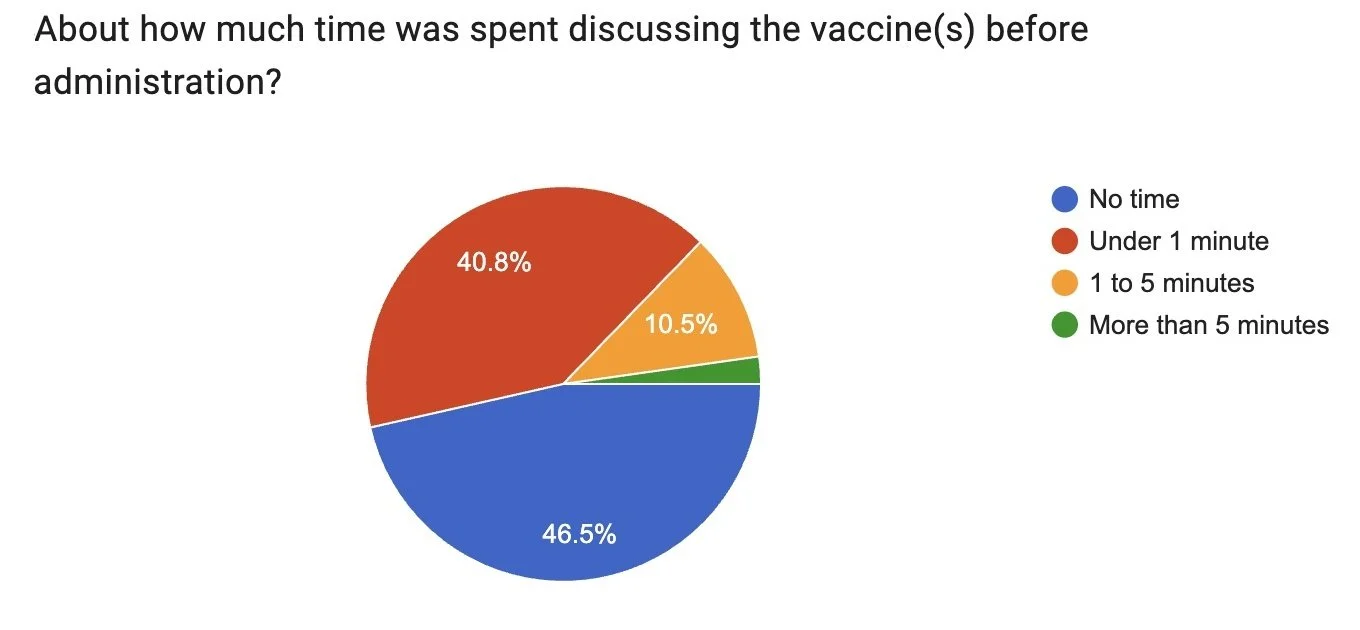
Informed consent depends on a real conversation, and for most of you that conversation never happened.
The Information Often Never Arrived
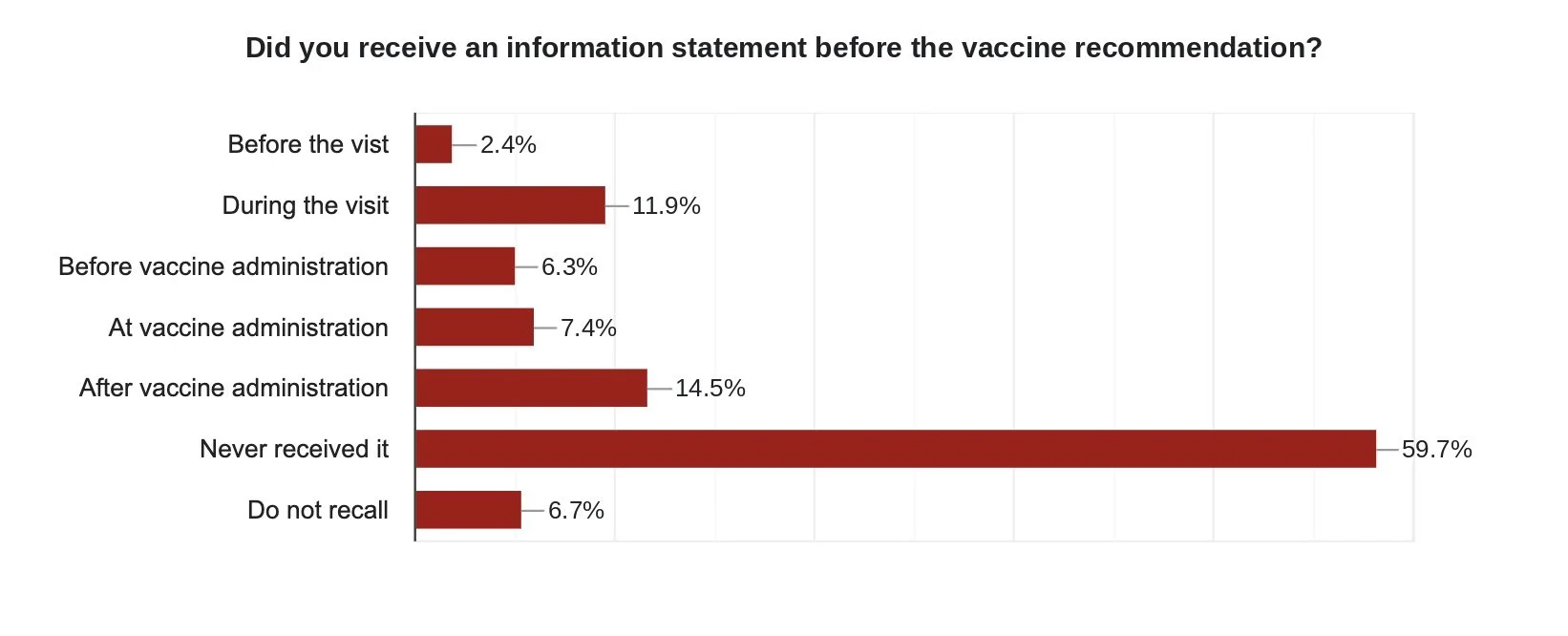
According to PERK’s Parent Vaccine Survey, 58% said they never received a Vaccine Information Statement.
Of the parents asked to sign something, 72.5% said they didn’t understand what they were signing.
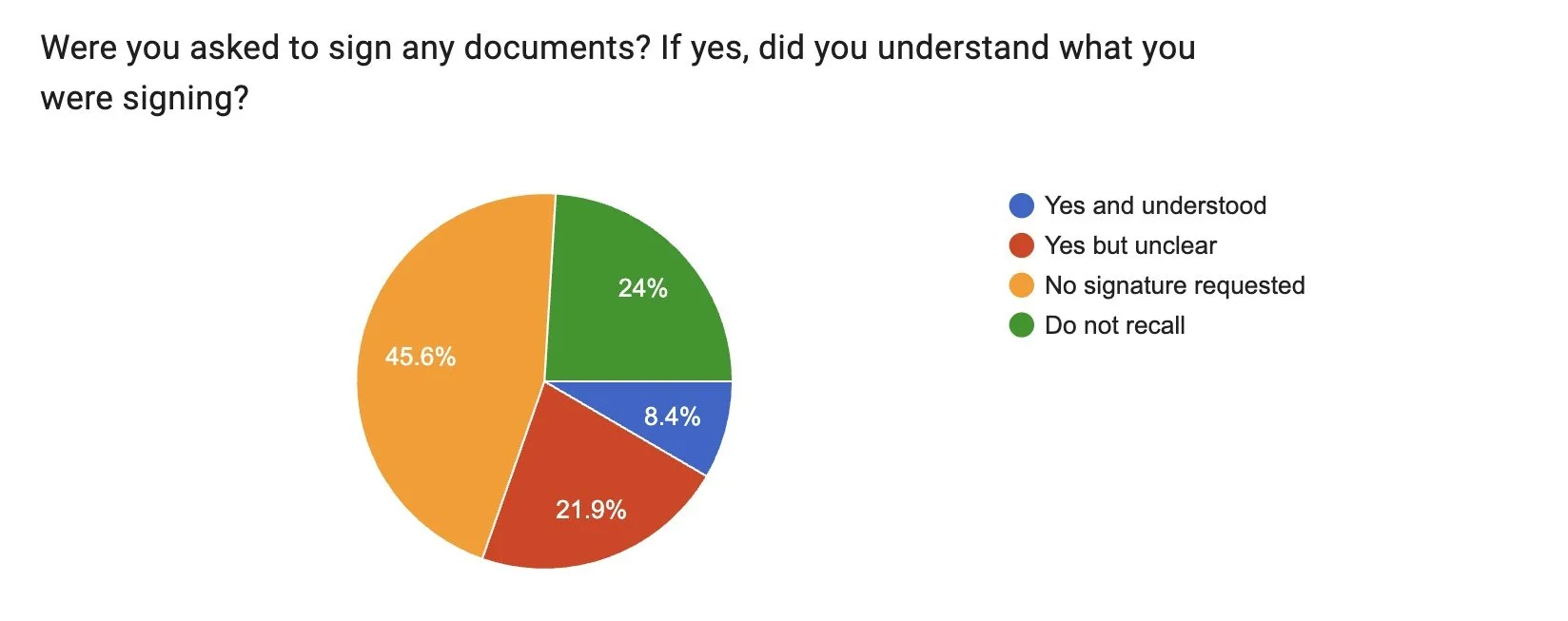
A signature is not the same as consent.
Only 8.3% Felt They Could Decline Without Consequences
We asked whether you felt you could ask questions or decline a vaccine without consequence.
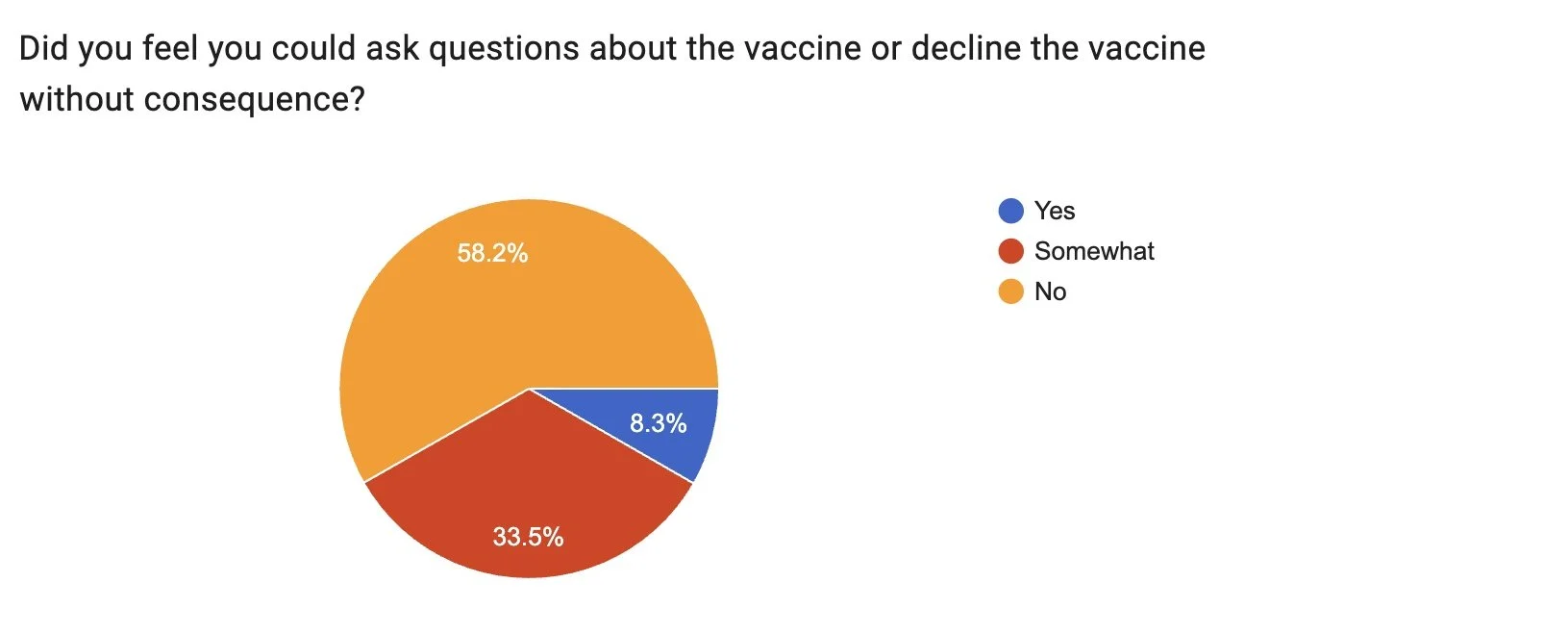
Fewer than 1 in 10 parents felt fully free to ask or decline.
What Happened When Parents Asked For a Different Approach?
76% of you, 583 parents, asked at some point to delay, space out, or separate your child’s vaccines. Here’s what happened:
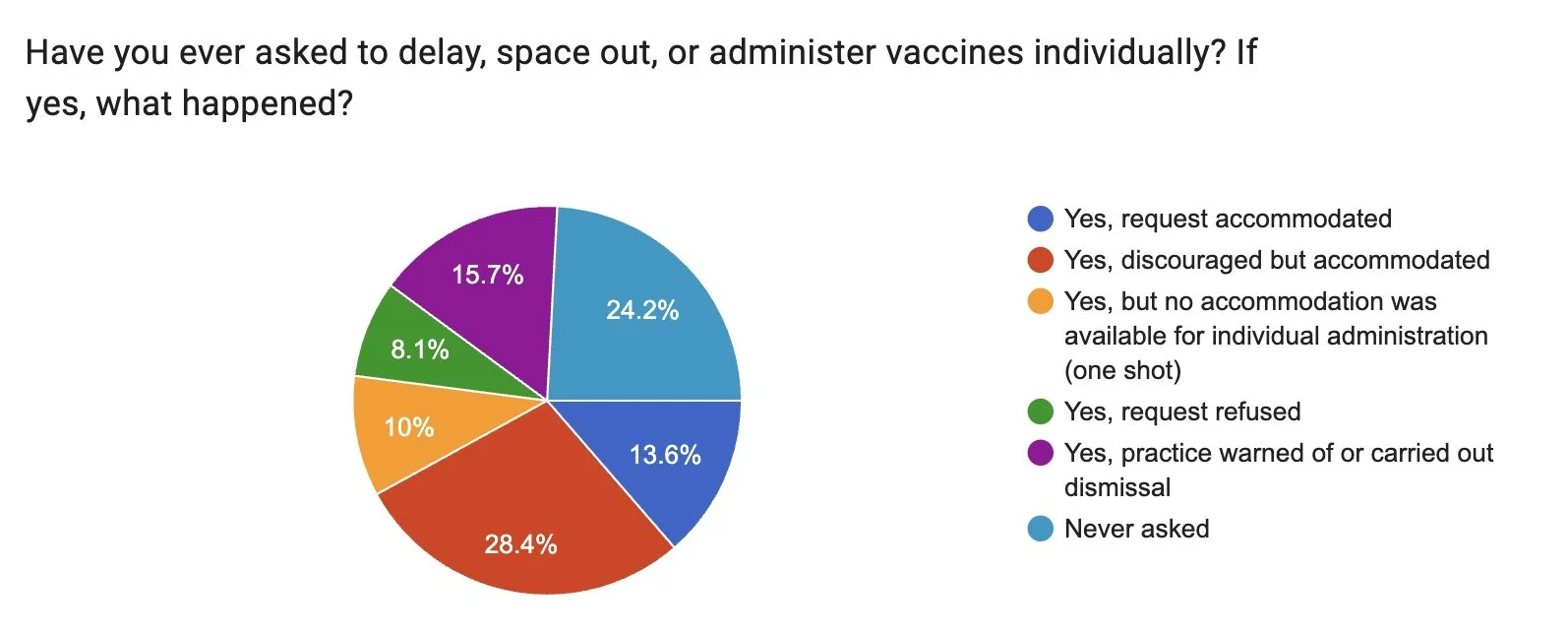
Roughly 1 in 5 parents who asked was warned of dismissal or actually dismissed by their child’s doctor for asking questions or requesting a different vaccination routine.
Was There Coercion, Bullying, or Discrimination?
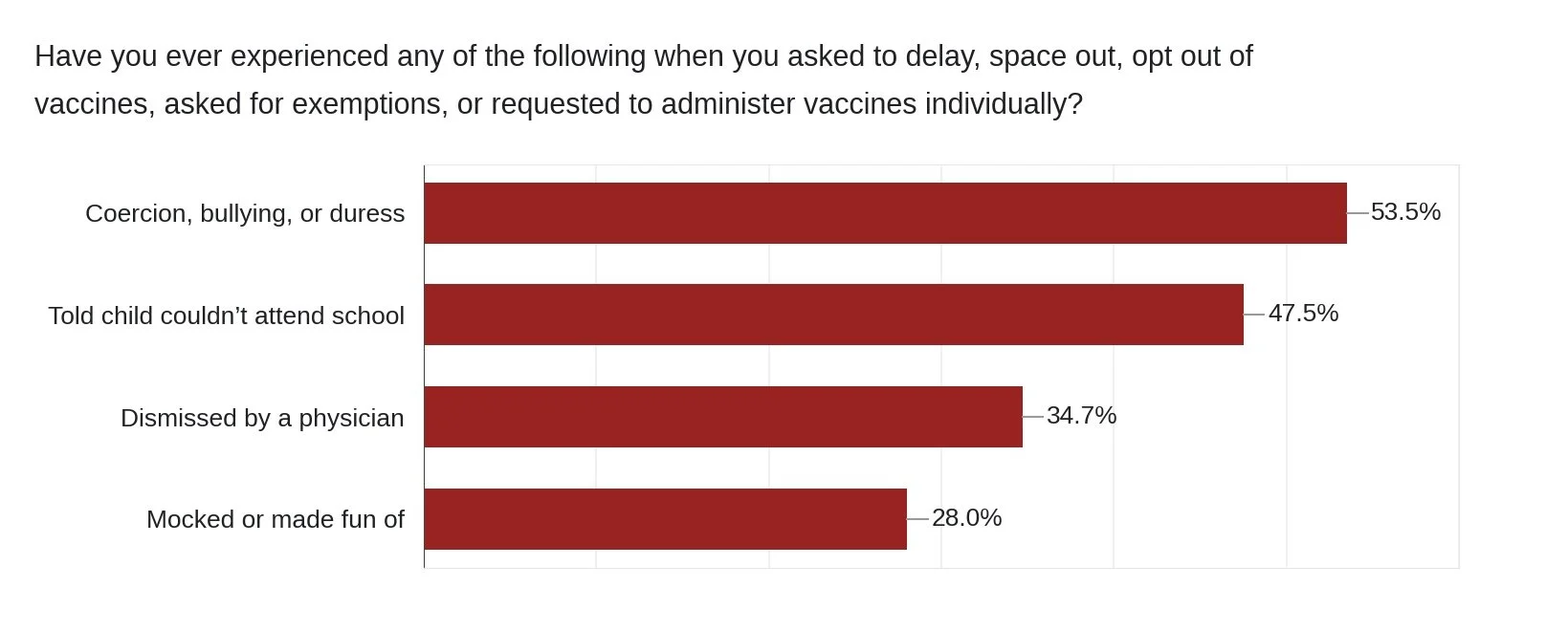
When we asked about consequences more broadly, including requests to opt out or seek an exemption, the most common answers were. Over 53% of parents experienced either coercion, bullying, or duress. Nearly half of parents were told their children could not attend school. 28% were mocked or made fun of.
Most Parents Had Never Heard of “Shared Clinical Decision-making”
82% of you had never heard of it. It’s the federal category meant to signal that a vaccine decision should involve a real conversation between parent and doctor.
The right to a real conversation shouldn’t depend on which category a vaccine falls into. It should apply to every vaccine, every time.
Only about 5% of parents reported billing or coverage confusion. That wasn’t a common problem in our community, and we told HHS so.
Consent Was Assumed, Not Asked
In your own words, 720 of you gave us permission to share your written answers with HHS. Did you give informed consent? Many of you wrote a lot. A few themes came up again and again:
Comment 1: “No I did not give consent as I understand the term because I was not informed of all side effects and I was not given on option to deny the vaccine - it was forced by the government.”
Comment 2: “No, I do not feel I was provided informed consent. The experience would have been better had I been provided thorough explanation of the side effects, vaccine inserts, vaccine ingredients, and the safety review period for each vaccine. Had I known HEP B was only reviewed for less than a week, I would have never given that to my child. The experience would be better without pressure, coercion, and shared decision making for all vaccines. I would also have wished information had been added to the statement sheet regarding where to report a vaccine injury, disclosures that none of the vaccines had a double blind placebo trial for testing, and the safety review was only days. The statement sheet could include all the side effects as recorded in the inserts and an additional disclaimer that manufacturers cannot be sued if you are harmed after taking the product.
Comment 3: “NO, but I was not informed so how could I consent? So actually being informed of the risk and told what my options were.”
Comment 4: “We never received informed consent. No risks were discussed, we were told to administer Tylenol before vaccine appointments. Initially…”
Consent was assumed, not asked. Many of you described a nurse walking in to say your child was “due” for a list of shots, with no point where anyone asked whether you agreed.
Being informed took your own research. Even among parents who said yes, they gave informed consent, many added that they only felt informed because they had done the research themselves. They didn’t get it from the doctor.
Questions were met with frustration. Parents described irritation, condescension, and being made to feel like a bad parent for asking.
Some of you found good doctors. Several parents told us about pediatricians who listened, answered every question, and respected their decisions. That is what it should look like everywhere.
What would have helped: time, full information before the appointment, an honest discussion of both risks and benefits, and the sense that saying no was a real option.
What We Asked HHS To Do
PERK asked the Department to adopt a presumption in favor of individual autonomy, informed consent, and religious freedom, so that every vaccine recommendation starts from the family’s right to decide. We also asked that religious exemptions be protected rather than treated as a loophole, and that no recommendation be allowed to quietly harden into a mandate.
Federal law requires your child’s provider to give you a Vaccine Information Statement before each dose of routine childhood vaccines. You’re entitled to it. Ask for it before the visit so you have time to read it, and ask your questions and do your own research before anything is given.
Read PERK’s Full Filing
Our resource summary of the HHS comment, including the full survey results, is now in our Resources section: (Click Here)
Thank you to every parent who took the time to answer honestly, and especially to those who shared hard experiences. Because of you, the federal government now has a record of what informed consent looks like from the parent’s side of the exam room.
Sincerely,
Amy Bohn
Co-Founder and CEO, PERK
@All Rights Reserved PERK Survey
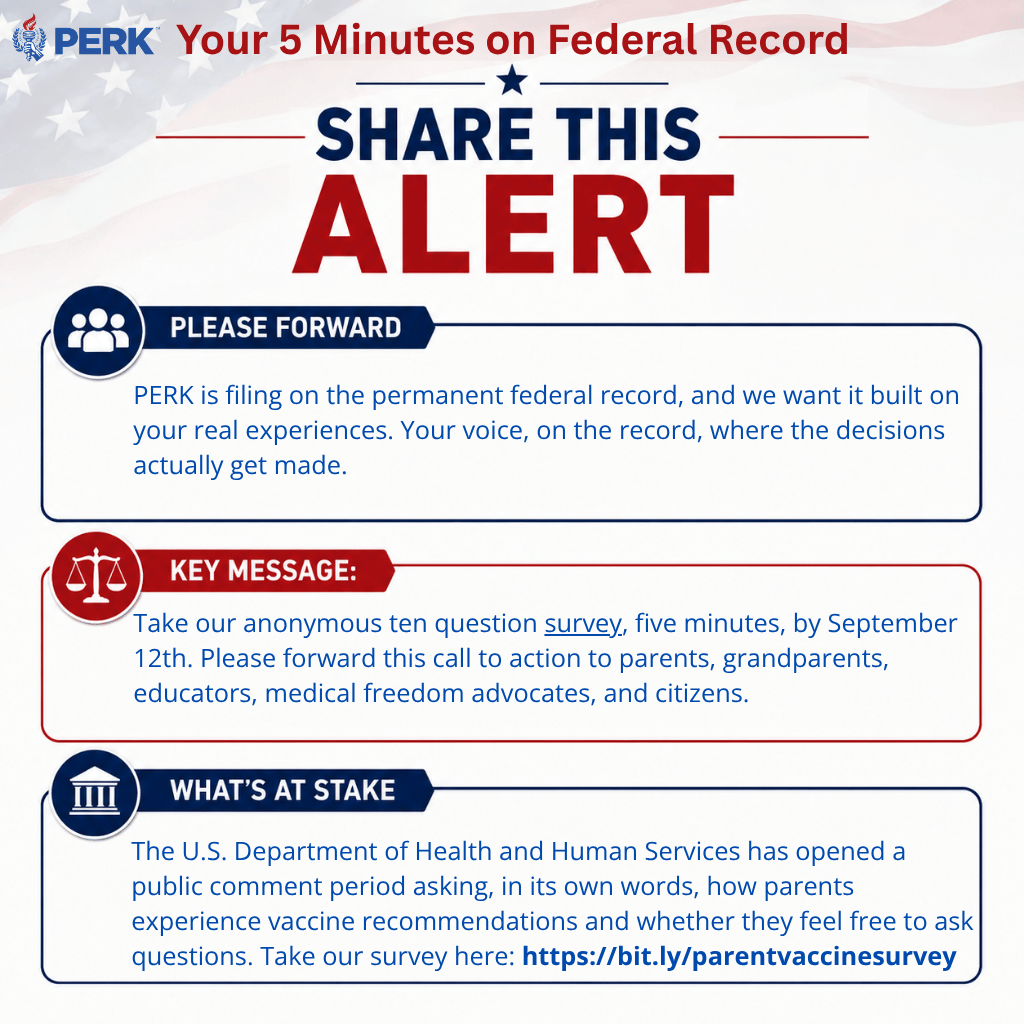
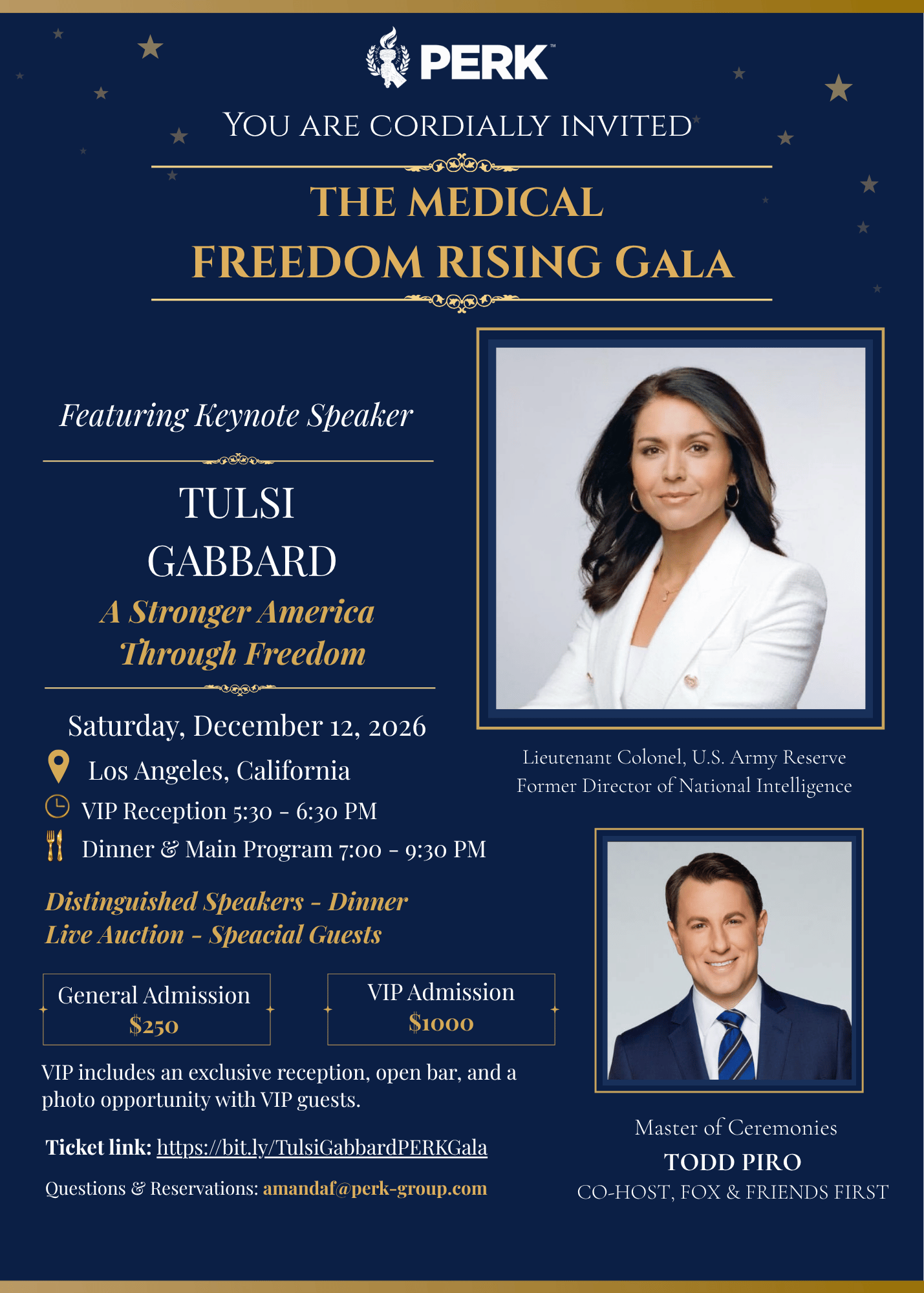
On November 12, the Senate Health Committee held a hearing in San Diego on medical exemptions. It happened because of SB 1377, the bill PERK sponsored this year. PERK President Amy Bohn, California dad Mike Bohn, Dr. Joel “Gator” Warsh, and Aimee Rickabus of Free Now Foundation stepped up to the mic and told the committee what its panel left out. Watch their comments and see what comes next.