Dear PERK Members,
At PERK, we believe parents have a fundamental right to guide the upbringing, education, and well-being of their children. That is why we filed an amicus brief in support of the State of California and in opposition to the effort to block key child protections in SB 976.
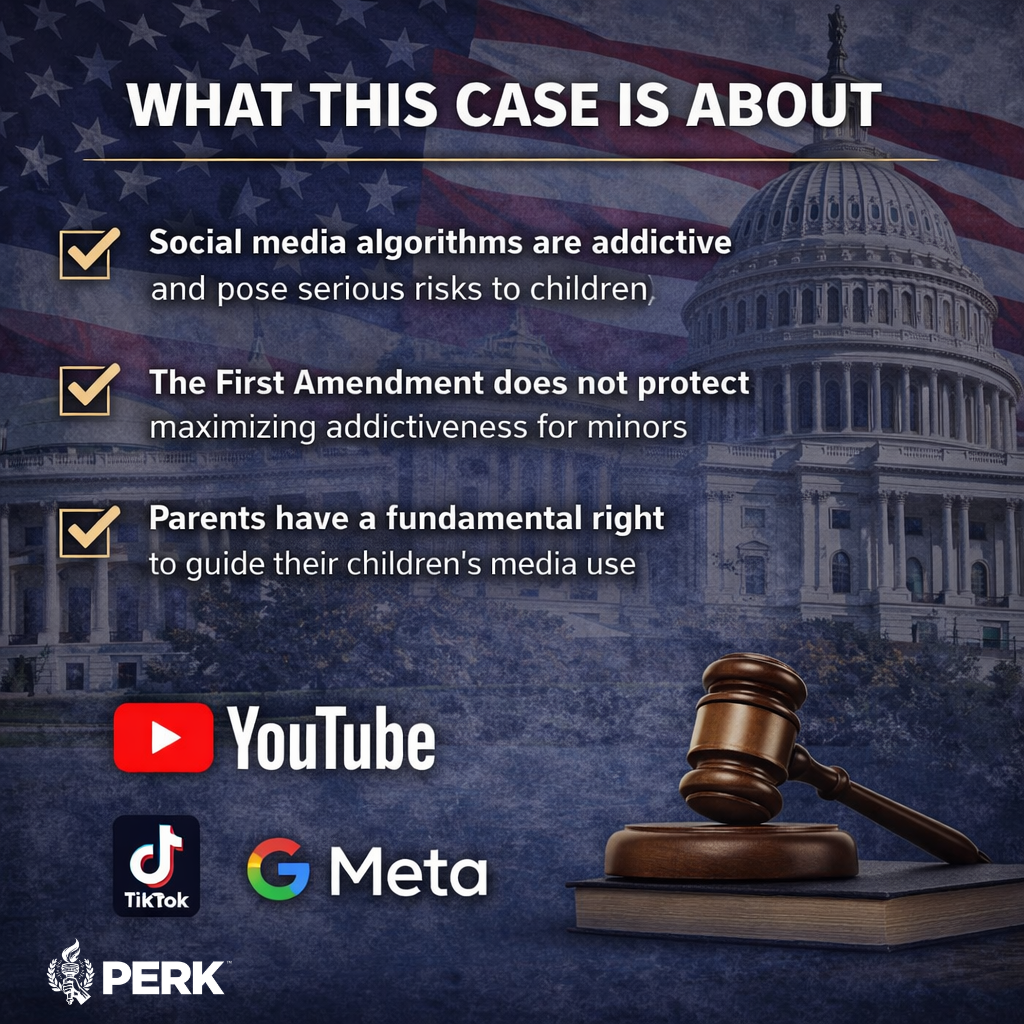
This case is about far more than social media convenience or corporate preference. It is about whether powerful digital platforms should be allowed to continue designing and delivering addictive algorithmic feeds to minors without meaningful limits, even as evidence grows that these systems can harm children’s mental health, sleep, development, and overall well-being. PERK’s brief makes the case that parents are increasingly being forced to navigate a digital environment that is intentionally engineered to capture and keep children’s attention.
Our brief highlights what many families already know from lived experience: social media is not neutral when it is driven by addictive feed technology. The research cited in the brief points to troubling links between heavy or compulsive social media use and psychological distress, depression-related outcomes, exposure to self-harm content, and poor sleep. The brief also explains that these harms are not fully solved by parental controls alone, especially when children face peer pressure and platforms are financially motivated to keep minors engaged for as long as possible.
Just as striking, the brief points out that social media executives and insiders have themselves admitted the addictive nature of these products. When even industry leaders acknowledge the role of dopamine-driven feedback loops and the inability of internal policies to fully address the harm, it becomes even clearer why states have a compelling interest in stepping in to protect children. Parents should not be expected to fight billion-dollar technology systems on their own.
PERK’s amicus brief also challenges the argument that algorithmic feed design should be treated as protected speech under the First Amendment. The core issue is not whether ideas or information may be shared online. The issue is whether platforms can claim constitutional protection for technology that is designed to maximize compulsive use in minors. The brief argues that these addictive digital systems are better understood as products or technologies that states may regulate under their police power to protect children, much like other harmful or addictive goods in commerce.
Most importantly, this case is about parental rights. Parents have a fundamental constitutional right to direct their children’s education and formation. That includes helping shape how children engage with media, technology, and online environments. SB 976 supports that right by placing reasonable limits on the ability of private social media companies to override parental authority through highly manipulative digital design.
PERK supported the passage of SB 976 because protecting children from addictive digital feeds is consistent with our mission to safeguard educational rights, parental rights, and the welfare of children. We filed this brief because the court should hear the voice of parents in this fight. Children are not products. Parents are not powerless. And the law should not give social media giants free rein to engineer dependency in the next generation.
The court should deny the motion for preliminary injunction and allow California’s protections for children to stand.
With gratitude,
Amy Bohn
PERK President