California Bills to Oppose in 2026
On behalf of concerned families and citizens, we respectfully ask PERK supporters, Organizations, and Legislators to oppose the following California bills. We’ve scrutinized these bills under the criteria of how the policy will impact health freedom, protect parental rights, and protect children. With that in mind here is an active list below of the bills we ask you to oppose. It takes less than one minute to send the letter we’ve redrafted for you.
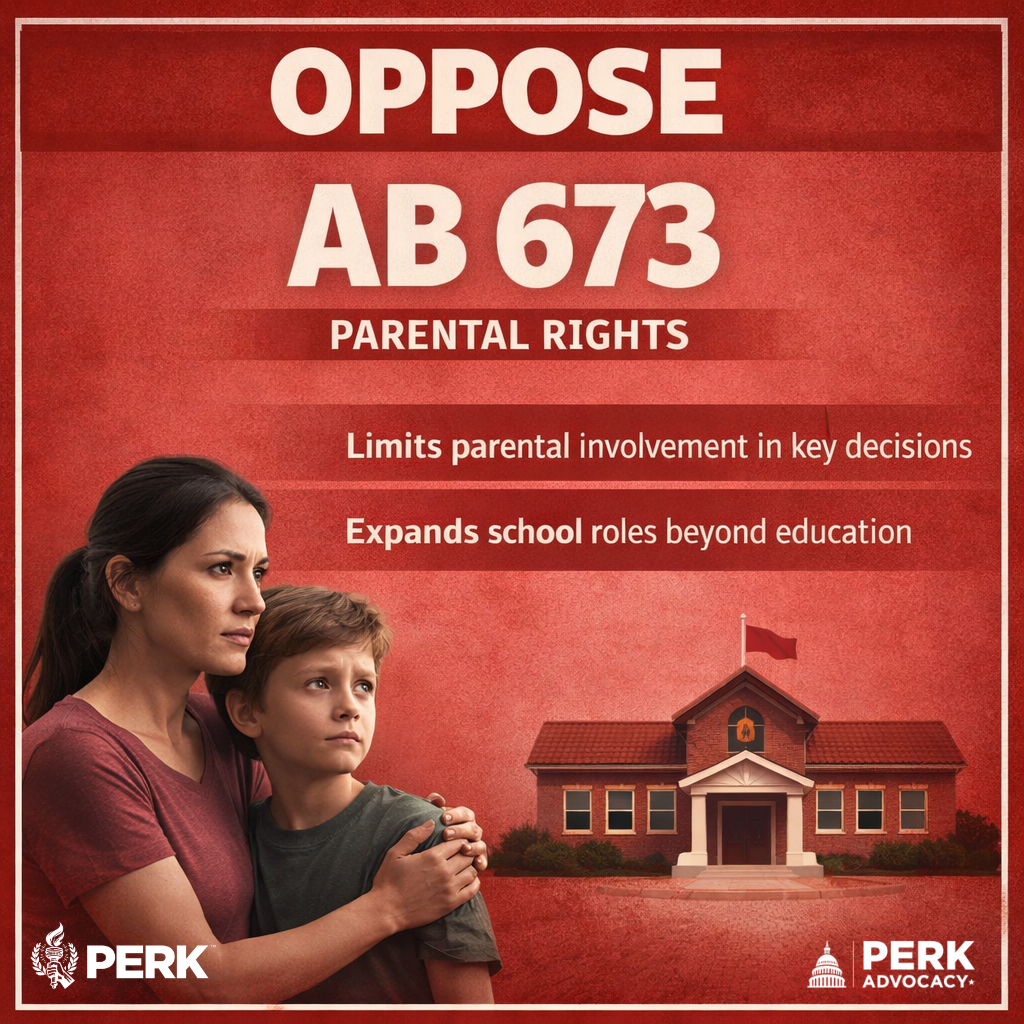
AB 673 (OPPOSE) – (JACKSON)
Concerns include limited parental involvement, schools taking on roles typically handled by families or social services, uneven support across districts, potential long-term costs, and questions about accountability and oversight.
The pilot program reduces parental involvement or awareness in key decisions affecting minors, giving schools roles traditionally handled by families or social service agencies. They may also raise concerns about inconsistent support across districts, high long-term costs, and insufficient accountability or oversight for how resources are used. Some could see this as government overreach into areas better managed by parents or existing social services.
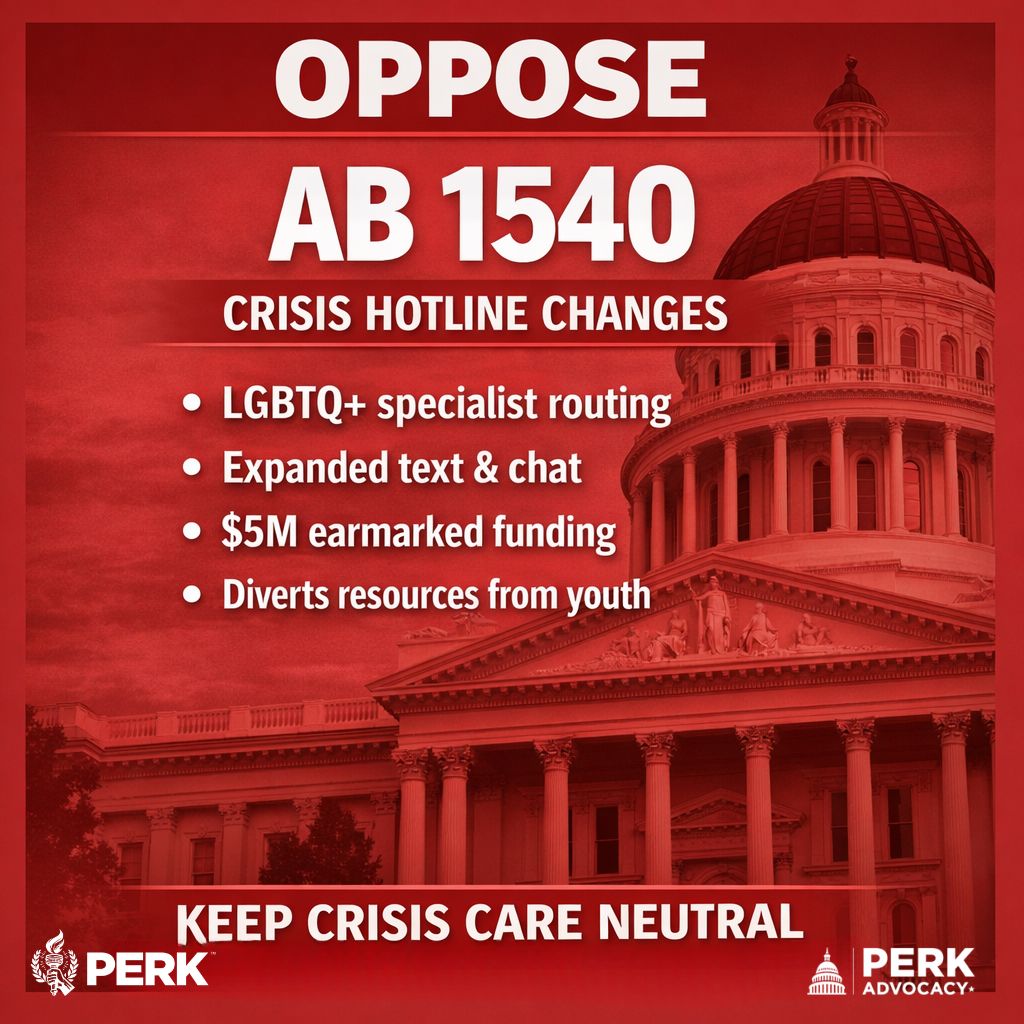
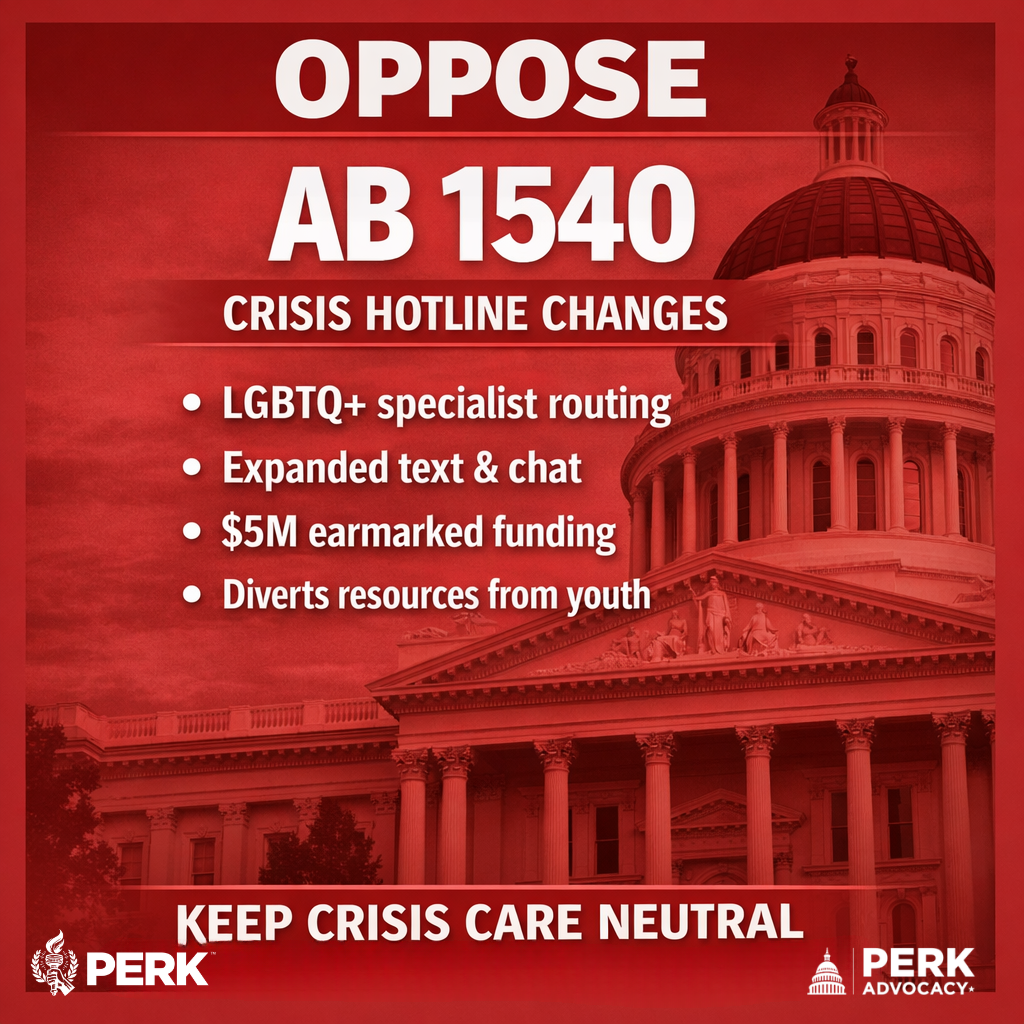
AB 1540 (OPPOSE) – (GONZÁLEZ/WARD)
The bill would change how California’s 988 Suicide & Crisis Lifeline operates by:
Adding a special call option that routes callers to LGBTQ+ youth suicide prevention specialists.
Expanding text and chat services connected to the hotline.
Providing $5 million in state funding to support LGBTQ+ programs tied to the service.
The funding would support ideologically driven guidance and could divert resources from other children in crisis.
The proposal diverts limited resources away from other children in crisis by earmarking $5 million specifically for LGBTQ+ programs. They could also express concern that creating a separate hotline option focused on LGBTQ+ youth risks introducing ideologically driven guidance rather than neutral mental health support. Additionally, some may worry that this segmentation of services could reduce overall efficiency and leave other vulnerable children with fewer resources or attention.
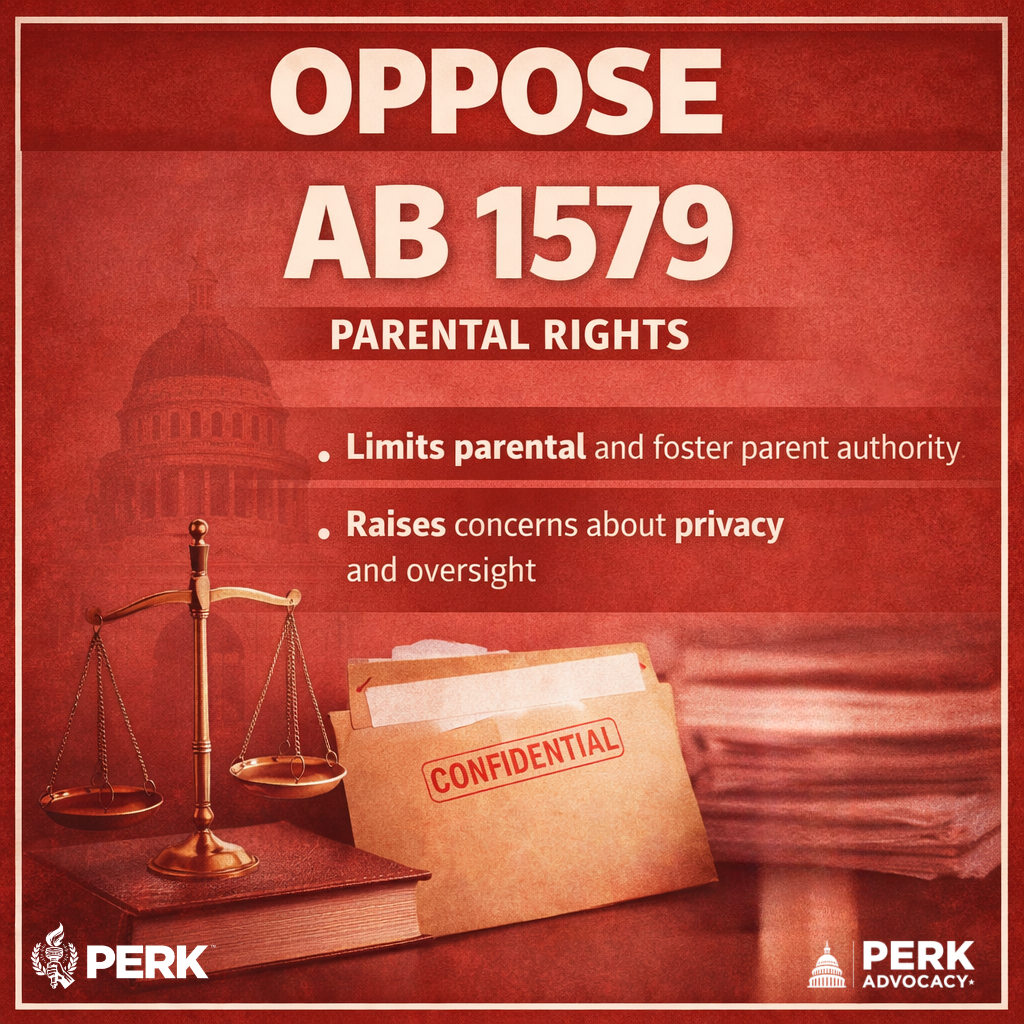
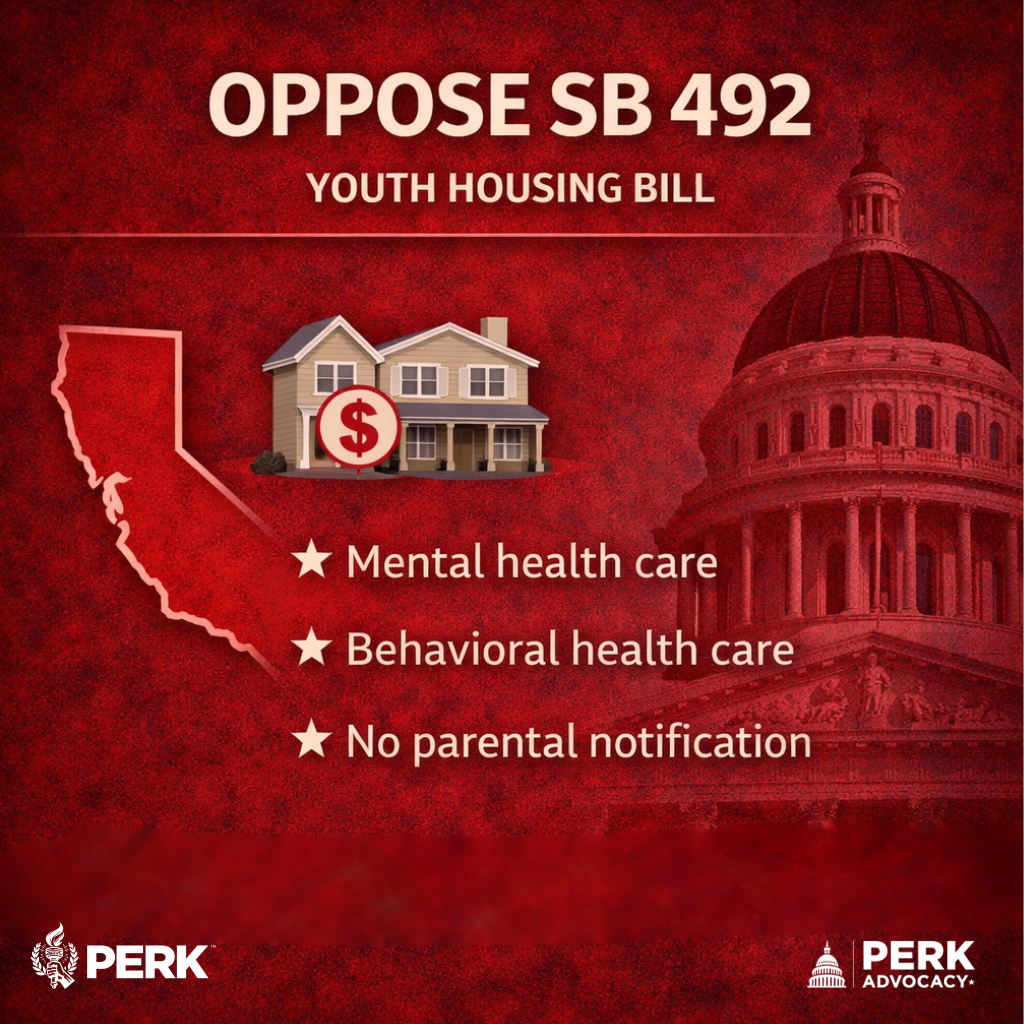
AB 1579 (OPPOSE) – (JACKSON)
The bill would create a pilot program providing mental health care for foster children and youth up to age 21, including crisis support, small residential programs, psychiatric care, specialized foster homes, and community services without parental notification or consent, potentially limiting parental knowledge. While designed to offer individualized care, concerns include government overreach, limited parental or foster parent authority in emergencies, and privacy issues.
The pilot program grants excessive government control over the mental health care of foster youth, potentially limiting the authority of parents or foster parents in emergencies or critical care decisions. They may also raise concerns about privacy, questioning how sensitive information will be managed. The program may become overly bureaucratic, expanding state involvement into areas that families or existing social services might otherwise handle, without guaranteeing better outcomes.
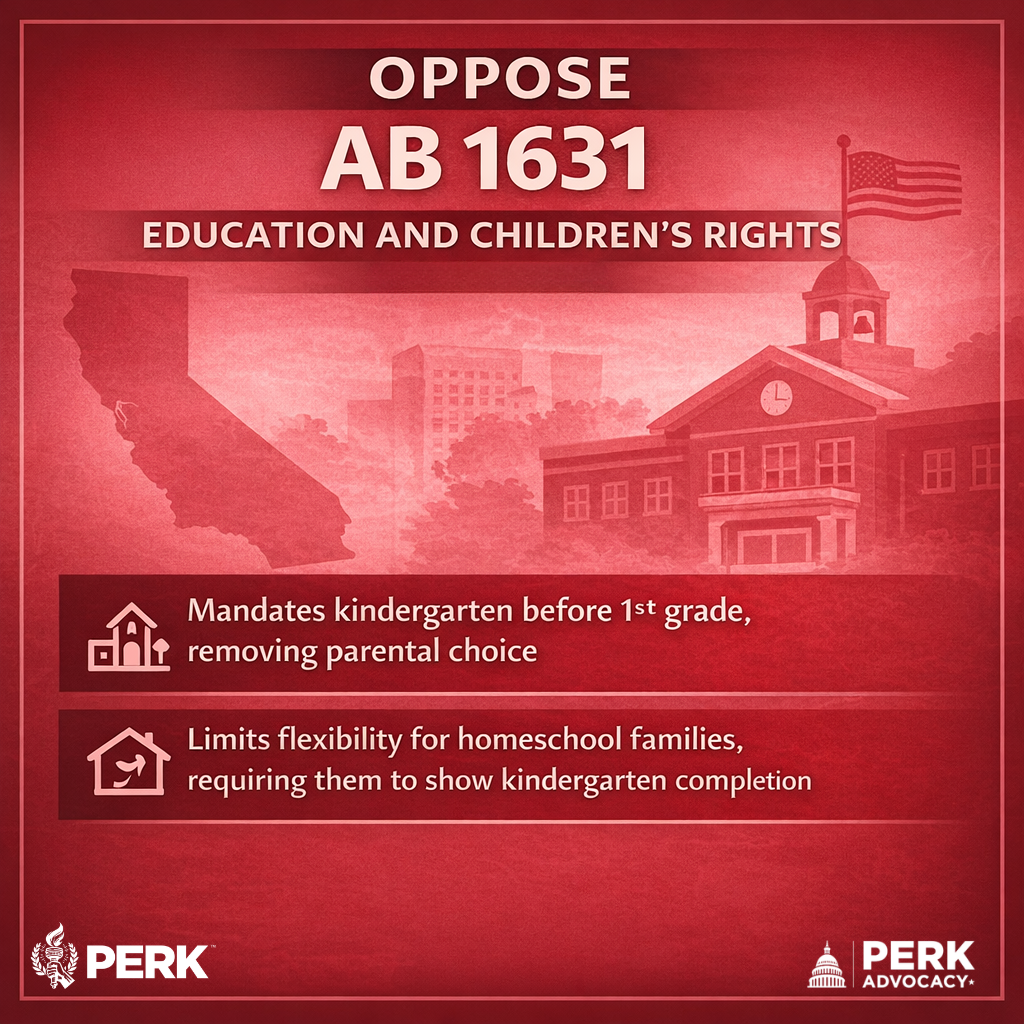
AB 1631 (OPPOSE) – (MURATSUCHI)
The bill would require children to complete one year of kindergarten before entering first grade in a public or charter school, making kindergarten a mandatory step rather than optional. Parents could still choose how the kindergarten year is completed—through public school, private school, or homeschooling—and the compulsory school age would remain six. Children who skip kindergarten generally could not go directly to first grade, though exceptions could be made if a child started kindergarten but didn’t finish the full year and is judged ready for first grade with parental consent. Homeschool students entering public first grade would also need to show completion of a kindergarten year or receive school approval to advance.
Making kindergarten mandatory before first grade could limit parental flexibility and interfere with homeschooling choices, even though parents can choose the setting. Some children develop at different rates, and a strict one-year requirement may delay academically or socially ready students from advancing. There are also administrative burdens for schools to assess readiness and approve exceptions, and opponents may view the policy as unnecessary government overreach into early childhood education decisions.
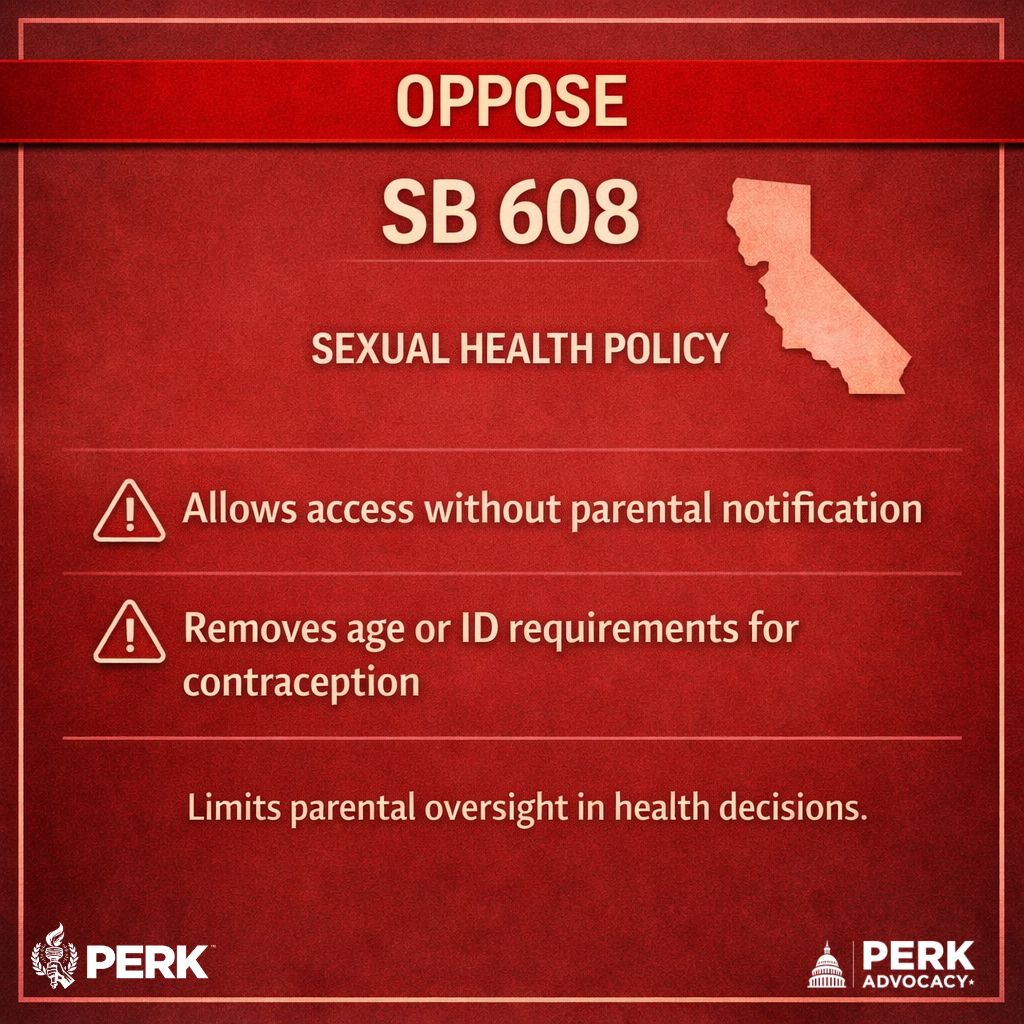
SB 608 (OPPOSE) - (MENJIVAR)
The bill would require the California Department of Education to monitor schools’ compliance with the Healthy Youth Act, ensuring that students in grades 7–12 receive comprehensive sexual health and HIV prevention education. It would allow school-based health centers to provide condoms as part of education or public health programs and prohibit restricting student access to them without parental notification or consent, potentially limiting parental knowledge. Additionally, the bill prohibits retail stores from refusing to sell nonprescription contraception based on age and ensures customers generally do not need to show ID to purchase these products, with limited exceptions.
The bill undermines parental authority and oversight by allowing students to access condoms at school without parental notification or consent, limiting parents’ ability to guide their children on sexual health decisions. They may also view the policy as government overreach into family and moral choices, exposing minors to sexual content or services that some parents may not approve of. Additionally, it raises concerns that removing age or ID requirements for purchasing contraception may encourage sexual activity among minors and reduce parental involvement in important health decisions.
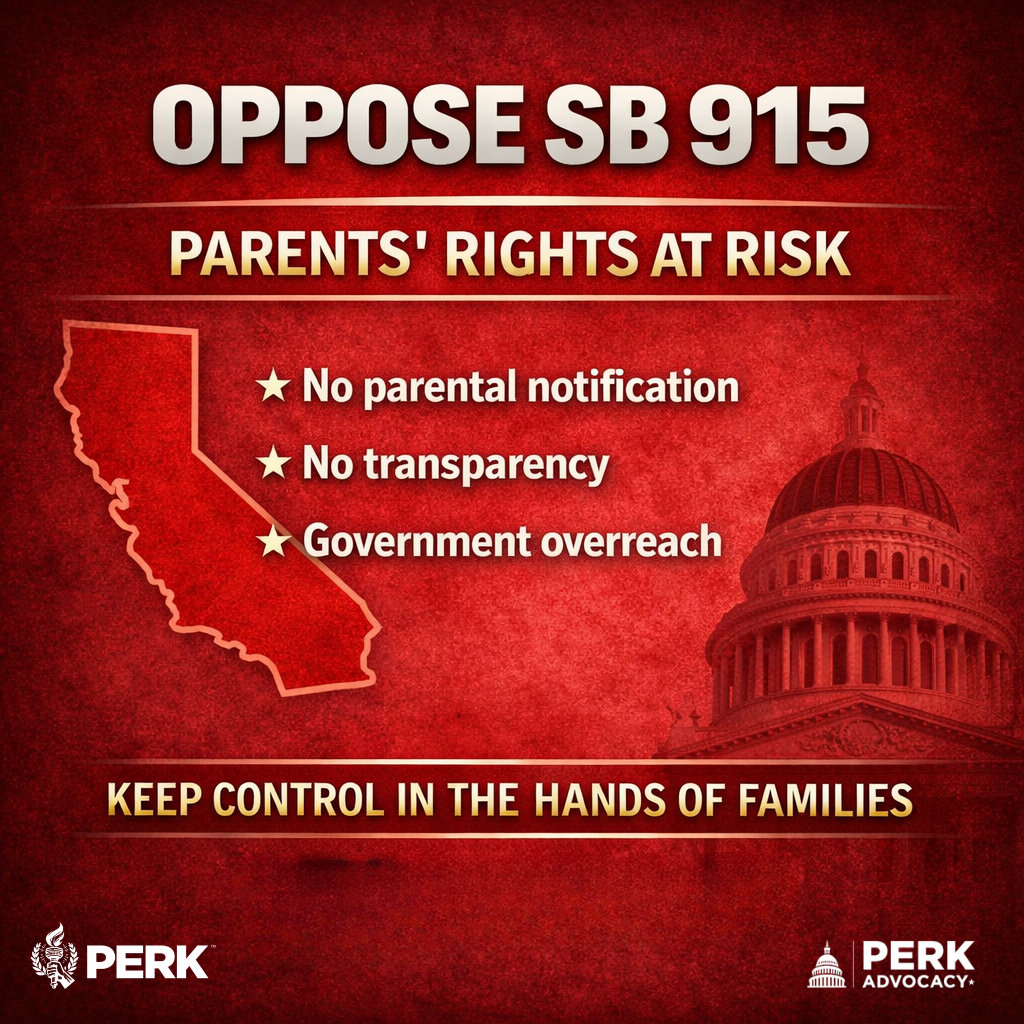
SB 915 (OPPOSE) – (MENJIVAR)
The proposal clarifies that mental health education in middle and high school health classes must be inclusive, accessible, and free from bias, with lessons designed to work for all students, including English learners and students with disabilities, and materials provided in appropriate formats.
It reinforces that instruction must not promote bias based on protected characteristics such as race, gender, or sexual orientation, and encourages coordination with school mental health staff (like counselors) so students can access support.
The bill does not add new lessons or requirements, but some parents may be concerned about parental rights and transparency because it does not require schools to notify parents when mental health instruction occurs or clearly outline the content being taught.
While the bill aims to make mental health education inclusive and accessible, it reduces parental oversight and transparency because schools are not required to notify parents about when lessons occur or what content is taught. Some parents may worry that instruction could include ideological or sensitive material without their knowledge or input, potentially limiting their ability to guide their child’s moral and social education. Opponents might also see this as government overreach into family decisions regarding mental health and values.
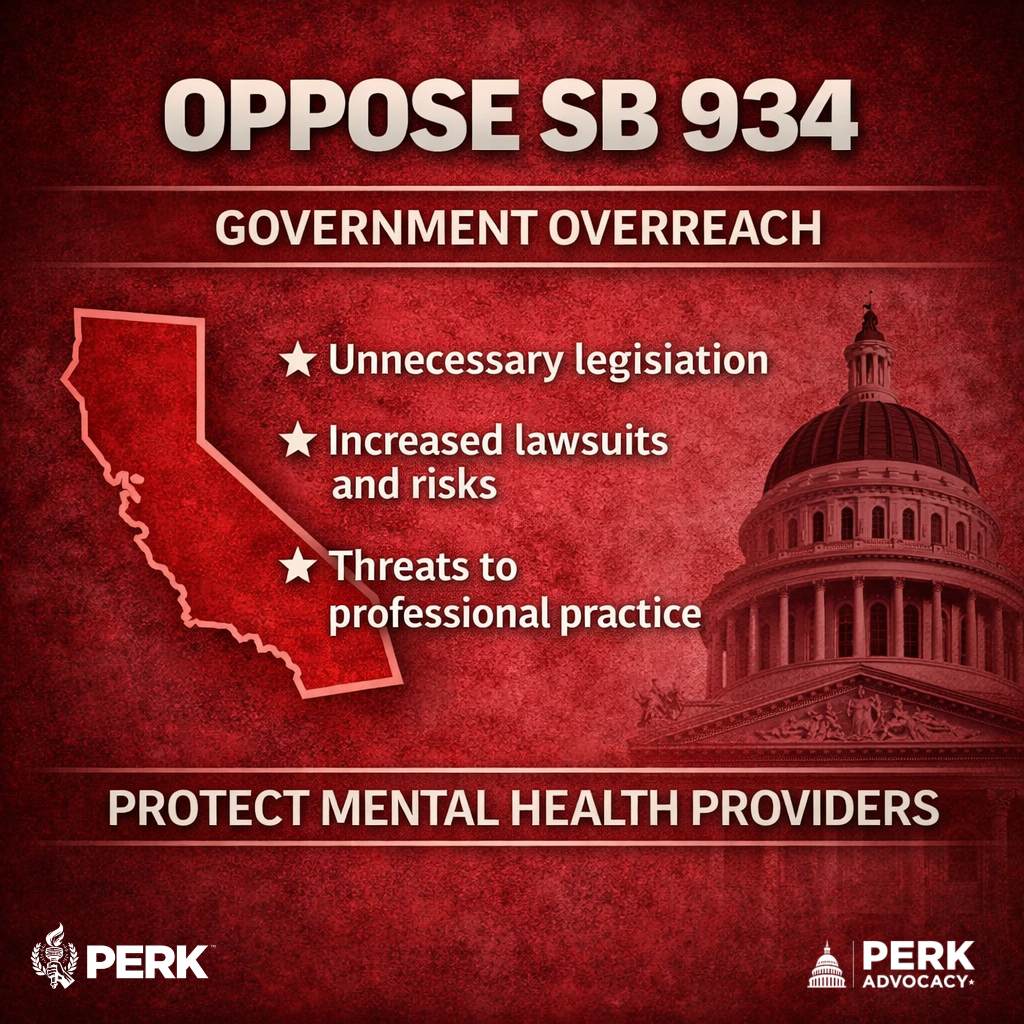
SB 934 (OPPOSE) – (WIENER)
The bill acknowledges that California already bans licensed mental health providers from performing sexual orientation or gender identity change efforts on minors, treating violations as professional misconduct. It also expresses the Legislature’s intent to pass future laws to ensure that individuals harmed by these practices have enough time to pursue legal remedies.
The bill is unnecessary because California already bans sexual orientation and gender identity change efforts on minors, making the additional legislative intent redundant. Extending legal timeframes for claims could lead to increased litigation, potentially imposing burdens on mental health providers and creating uncertainty or fear of legal consequences even when professionals are following existing rules. This is government overreach into professional practice without adding meaningful protections.